
If you run an online store, one of the most important parts of your operation is ecommerce fulfilment. It’s the process that takes place after a customer clicks “Buy Now” — and it can make or break your customer experience.
In this guide, we explain exactly what ecommerce fulfilment is, how it works, and why outsourcing it can help your business scale.
What Is Ecommerce Fulfilment?
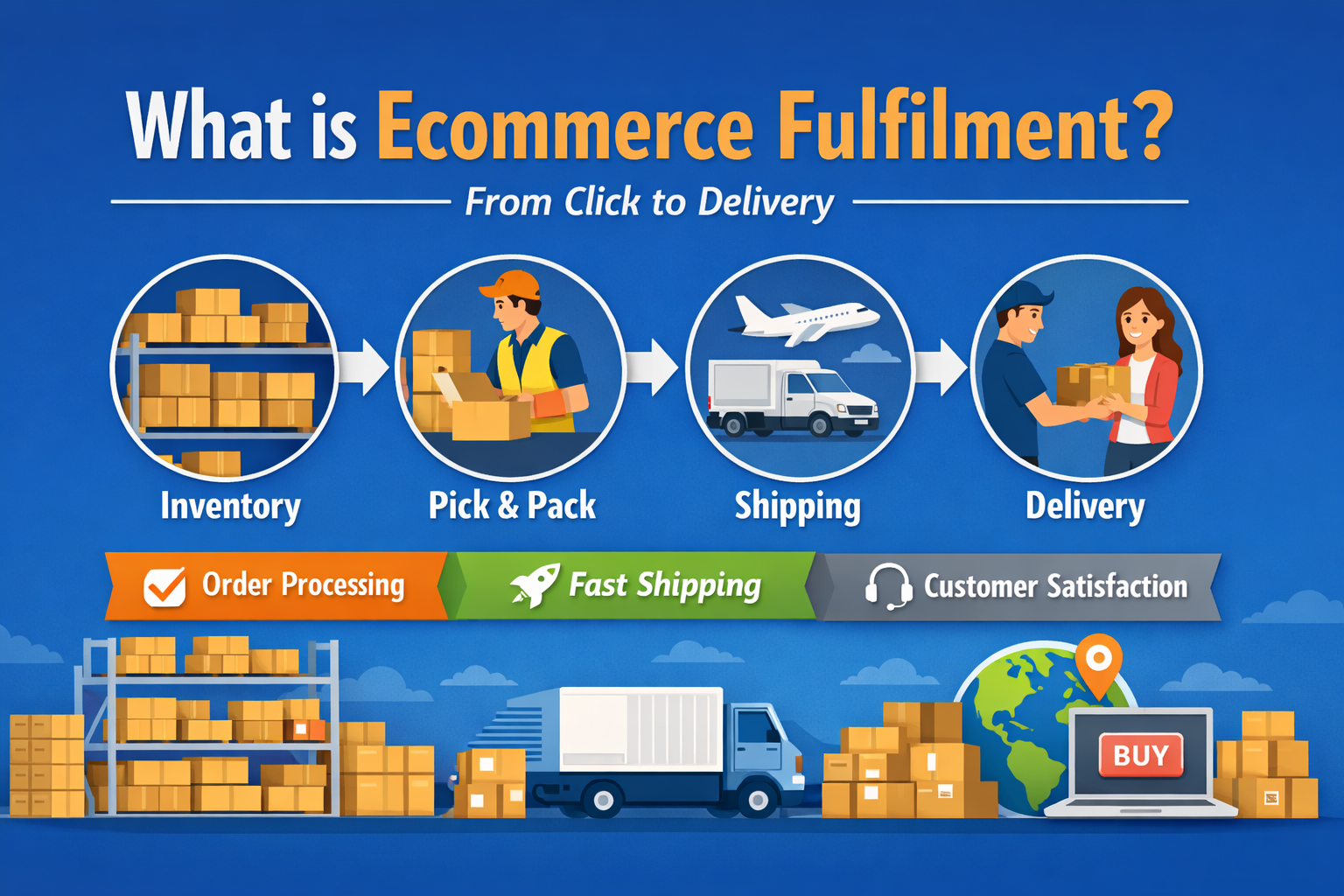
Ecommerce fulfilment is the complete process of storing, picking, packing, and shipping products to customers who place orders online.
It typically includes:
- Receiving inventory
- Warehousing and storage
- Order processing
- Picking and packing
- Shipping and delivery
- Returns handling
- Inventory management
In short, ecommerce fulfilment covers everything that happens after a customer places an order.
How Ecommerce Fulfilment Works
A typical ecommerce fulfilment process follows these steps:
1. Inventory Is Received
Your stock is delivered to a fulfilment centre, where it is checked, counted, and stored in an organised warehouse environment.
2. Orders Are Received
When a customer places an order on your website (Shopify, WooCommerce, Amazon, etc.), the order details are automatically sent to the fulfilment system.
3. Picking
Warehouse staff locate the ordered items and pick them from storage.
4. Packing
The items are carefully packed using appropriate packaging materials to ensure safe delivery.
5. Shipping
The parcel is labelled and dispatched using a courier network.
6. Delivery
The order is delivered to the customer, often with tracking provided.
7. Returns (Optional)
If the customer returns an item, the fulfilment centre receives and processes it.
Why Ecommerce Fulfilment Is Important
Efficient ecommerce fulfilment helps businesses:
- Deliver orders faster
- Reduce shipping errors
- Improve customer satisfaction
- Scale without hiring warehouse staff
- Lower operational costs
- Focus on sales and marketing
Poor fulfilment, on the other hand, can lead to delays, mistakes, and negative reviews.
In-House vs Outsourced Ecommerce Fulfilment
Many businesses start by fulfilling orders themselves, but as order volumes grow, outsourcing becomes more efficient.
In-House Fulfilment
You store and ship orders yourself. This works for small businesses but becomes difficult to manage as you grow.
Outsourced Fulfilment (3PL)
A third-party logistics (3PL) provider handles storage, packing, and shipping for you. This allows your business to scale without warehouse overheads.
Who Needs Ecommerce Fulfilment?
Ecommerce fulfilment is ideal for:
- Shopify stores
- WooCommerce stores
- Amazon sellers
- Subscription box businesses
- Crowdfunding campaigns
- Retail brands expanding online
- Importers needing UK distribution
If you ship products to customers, you need ecommerce fulfilment.
Benefits of Outsourcing Ecommerce Fulfilment
Outsourcing your fulfilment can provide:
- Faster delivery times
- Professional packing
- Real-time inventory tracking
- Reduced storage costs
- Scalable operations
- Access to courier discounts
- Improved accuracy
This allows you to focus on growing your business instead of managing logistics.
Choosing the Right Ecommerce Fulfilment Partner
When selecting a fulfilment provider, consider:
- Warehouse location
- Courier options
- Integration with your ecommerce platform
- Pricing structure
- Returns management
- Reporting and tracking
- Customer support
The right partner should feel like an extension of your business.
Final Thoughts
Ecommerce fulfilment is the backbone of any successful online store. From receiving inventory to delivering orders, it plays a crucial role in customer satisfaction and business growth.
Whether you’re just starting out or scaling rapidly, having a reliable ecommerce fulfilment solution can streamline your operations and help you grow with confidence.
If you’re looking for reliable ecommerce fulfilment services, learn more about our solutions here:
https://ecommercefulfilmentcentre.com/ecommerce-fulfilment/
0 Comments