
Comprehensive Returns Handling for E-commerce Fulfilment Success
In the world of online retail, returns are an inevitable part of the customer journey. Whether due to sizing issues, damaged goods or simply buyer preference, ecommerce returns can significantly impact your operational costs, customer satisfaction, and inventory accuracy. That’s why efficient ecommerce returns handling is essential for any fulfilment strategy.
What Is Returns Handling in E-commerce?
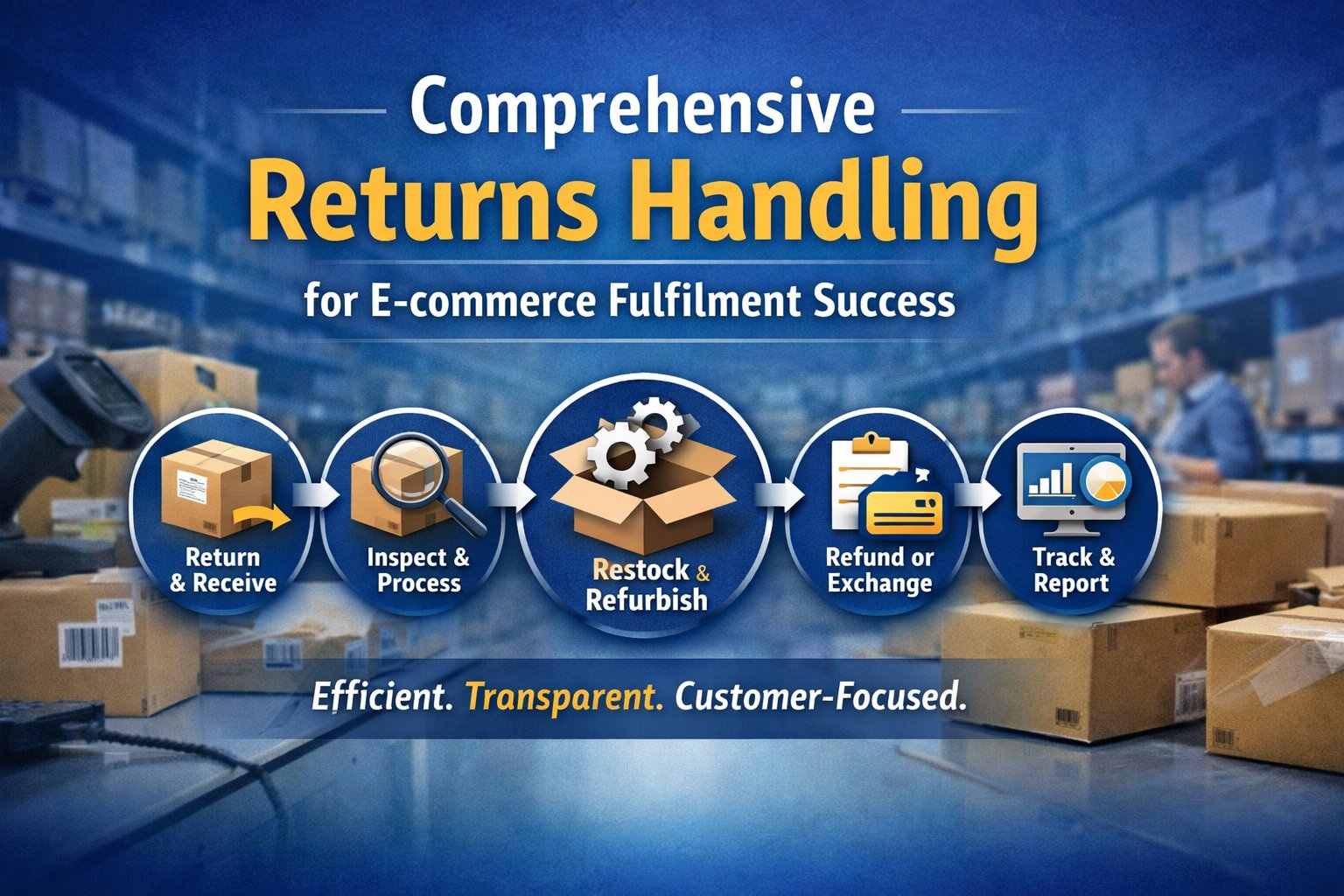
Returns handling refers to the structured process through which returned products are received, inspected, processed, and resolved — whether that means restocking, refurbishing, disposing, or issuing refunds. Effective returns handling ensures that returned items are seamlessly re-integrated into inventory and that customers receive timely communication throughout the process.
This crucial component of returns management plays an important role in both customer experience and operational efficiency, helping businesses preserve margins and increase repeat purchases.
Why Effective Returns Handling Matters
Returns may be unavoidable, but poorly handled returns lead to:
-
Delayed refunds or replacements — hurting customer trust.
-
Inventory inaccuracies — leading to stockouts or overstocks.
-
Higher operational costs — due to manual reverse logistics.
By contrast, a streamlined and transparent returns handling system builds customer loyalty and positions your brand as reliable and customer-centric.
Best Practices for Ecommerce Returns Handling
A well-designed returns handling workflow should prioritise simplicity, speed, and clarity. Here’s how to elevate your returns process:
1. Offer a Clear, Accessible Return Policy
Customers often check return terms before purchasing. Your policy should be easy to find, straightforward, and fair — covering eligible items, timeframes, and any associated costs.
2. Simplify the Returns Process
Provide pre-paid labels, multiple return options, and clear instructions to reduce friction. Handling returns efficiently increases the likelihood of future sales.
3. Speed and Transparency Matter
Customers expect quick refunds or exchanges. Communicate return status and timelines clearly to maintain trust.
4. Leverage Technology and Reporting
Using automation and integrated systems helps track returns, update inventory in real time, and generate insights that can reduce future return rates.
5. Analyse Return Trends
Reporting on reasons for returns can identify product issues, reduce repeat returns, and inform quality improvements or product descriptions.
Returns Handling as Part of Your Fulfilment Ecosystem
Outsourcing returns handling to a specialist fulfilment partner can lift a heavy operational burden off your team. A professional returns management service ensures consistent workflows, intelligent handling of reverse logistics, and scalable processes as your business grows.
Integrating returns handling with your core fulfilment operations — including pick & pack and inventory management — creates a seamless loop from dispatch to return and re-stock, improving overall visibility and efficiency.
Conclusion:
Effective ecommerce returns handling turns a challenging part of retail into an opportunity: it enhances customer satisfaction, strengthens brand loyalty, and streamlines operational workflows. By adopting best practices, embracing automation, and partnering with a fulfilment specialist, your business can handle returns with confidence and precision.
0 Comments