
What Is 3PL Warehousing and Why Growing Businesses Are Choosing It
As businesses grow, logistics quickly becomes more complex. Managing storage, stock control, order preparation, and distribution internally can consume time, space, and resources that could otherwise be focused on sales and growth. This is where 3PL warehousing (third-party logistics warehousing) becomes an increasingly attractive solution.
3PL warehousing allows businesses to outsource their storage and warehouse operations to a specialist provider, giving them access to professional infrastructure, trained staff, and established processes without the overhead of running their own warehouse.
Understanding 3PL Warehousing
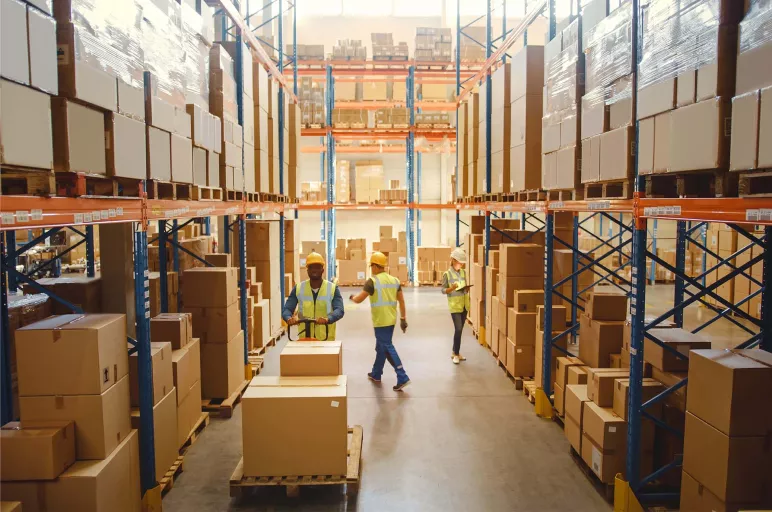
At its core, 3PL warehousing combines storage, handling, and logistics management into a single integrated service. Rather than simply renting warehouse space, businesses benefit from a complete operational solution that can include goods receiving, inventory management, picking and retrieval, and outbound dispatch coordination.
This approach is particularly valuable for ecommerce businesses, importers, wholesalers, and growing brands that need flexibility. As order volumes fluctuate or expand, a 3PL provider can scale operations accordingly, removing the need for costly warehouse expansion or additional staffing.
For a detailed overview of how this works in practice, you can explore EFCL’s dedicated 3PL warehousing services.
The Benefits of Outsourcing Warehousing
One of the main advantages of 3PL warehousing is efficiency. Warehouse operations require specialised systems, equipment, and processes to run smoothly. By outsourcing these functions, businesses gain immediate access to established workflows that reduce errors and improve turnaround times.
Cost control is another major benefit. Instead of investing in long-term leases, warehouse equipment, and operational staff, businesses pay for the space and services they actually use. This makes logistics costs more predictable and easier to manage as volumes change.
3PL warehousing also improves operational visibility. Many providers offer reporting and inventory tracking systems that allow businesses to monitor stock levels and movements in real time, supporting better purchasing and distribution decisions.
Supporting Ecommerce and Growing Supply Chains
Ecommerce growth has accelerated the demand for 3PL warehousing. Fast order fulfilment, accurate stock management, and reliable dispatch are essential for maintaining customer satisfaction. A well-structured 3PL operation helps businesses meet these expectations without overextending internal resources.
For companies importing goods, 3PL warehousing also simplifies the transition from inbound shipments to storage and distribution. Goods can be received, processed, and prepared for dispatch within the same environment, reducing handling delays and improving overall supply chain flow.
When to Consider 3PL Warehousing
Businesses typically move to a 3PL model when storage space becomes limited, order volumes increase, or logistics begins to distract from core business activities. Rather than continuously adapting internal processes, outsourcing allows operations to stabilise while the business continues to grow.
Whether you’re scaling an ecommerce operation, expanding into new markets, or looking to simplify logistics, 3PL warehousing provides a flexible and future-ready solution that adapts alongside your business.
0 Comments